Proven Capital Allocation Strategies for Maximum ROI

Effective capital allocation drives maximum ROI. Learn proven strategies for optimizing investments, managing risk, and fostering sustainable growth in any market.

From years in finance and operations, I’ve witnessed firsthand the profound impact of well-executed capital allocation. It’s more than just spending money; it’s a strategic framework for deploying resources where they yield the greatest return. Every dollar a company spends, invests, or returns to shareholders is a capital allocation decision. The goal is always to maximize shareholder value over the long term, balancing growth, risk, and liquidity. Poor decisions here can cripple even the most promising ventures, while sound ones build enduring value. This isn’t theoretical; it’s about making real-world choices that drive profitability and sustainability in competitive markets like the US.

Key Takeaways

  • Effective capital allocation is crucial for long-term shareholder value and sustainable growth.
  • Prioritizing projects with high internal rates of return (IRR) is a core strategy.
  • Shareholder returns via dividends and buybacks demonstrate financial health and boost investor confidence.
  • Debt management and balancing leverage are critical components of capital structure.
  • Strategic M&A, when disciplined, can accelerate market presence and technological advantage.
  • Investing in operational efficiency and R&D provides foundational support for future earnings.
  • A dynamic approach, adapting to market conditions and internal performance, is essential.

Optimizing Investment Portfolios for Maximum ROI: Capital Allocation Strategies for Maximum ROI

The foundation of robust capital allocation lies in rigorously evaluating investment opportunities. We’ve seen companies flounder by chasing every shiny new project. Instead, the focus must be on disciplined project selection. This means identifying initiatives with the highest expected returns, considering both internal rate of return (IRR) and net present value (NPV). For example, a manufacturing firm might choose to invest in automated assembly lines, knowing this significantly reduces labor costs and increases output quality, leading to a measurable boost in profitability. This direct investment in operational improvements often outpaces speculative ventures.

Another vital aspect is re-investment into core businesses. Successful firms often excel by doubling down on their strengths. This could involve expanding product lines that already dominate their market or upgrading infrastructure to maintain a competitive edge. It’s about allocating capital to areas where the company possesses a distinct advantage, thereby reinforcing its market position and driving sustained earnings. Many successful US companies attribute their longevity to consistent, strategic re-investment.

Strategic Resource Deployment for Sustained Growth

Beyond direct project investment, capital allocation extends to managing a company’s overall financial structure. This includes debt management, dividend policies, and share repurchases. A prudent approach to debt involves maintaining an optimal leverage ratio that supports growth without overburdening the balance sheet. Excessive debt can limit flexibility during downturns, while too little might mean missed growth opportunities. Striking this balance is an art, honed through experience.

Furthermore, returning capital to shareholders through dividends or buybacks signals confidence and can boost stock performance. Dividends provide immediate income, appealing to income-focused investors. Share repurchases, on the other hand, reduce the number of outstanding shares, increasing earnings per share and often driving stock price appreciation. Deciding between these methods requires a deep understanding of investor base preferences and the company’s future growth prospects. These decisions directly influence a company’s attractiveness and value perception in the market.

Risk Mitigation and Shareholder Value: Capital Allocation Strategies for Maximum ROI

Effective Capital Allocation Strategies for Maximum ROI inherently involve proactive risk management. Deploying capital into ventures without adequate risk assessment is simply gambling. We advocate for a multi-faceted approach where potential risks — market, operational, financial, and regulatory — are thoroughly analyzed alongside potential returns. This means not just identifying risks but quantifying their impact and formulating mitigation plans. For instance, diversifying capital across various projects or business segments reduces dependency on a single revenue stream. A diversified portfolio, even within a single company, protects against unforeseen challenges affecting one specific area.

Moreover, maintaining a healthy cash reserve is a capital allocation decision itself. Liquid assets provide a buffer against economic shocks, offering flexibility for opportunistic investments or navigating unexpected challenges. The COVID-19 pandemic highlighted the critical importance of liquidity. Companies with strong cash positions could not only weather the storm but also acquire distressed assets or invest in new technologies at favorable valuations. This strategic cash management directly safeguards shareholder value and ensures long-term resilience.

Operational Efficiency and Future Expansion: Capital Allocation Strategies for Maximum ROI

Sustained Capital Allocation Strategies for Maximum ROI also prioritize operational efficiency and future growth. Investing in technology upgrades, research and development (R&D), and employee training are not merely expenses; they are critical capital investments. Upgrading legacy systems streamlines processes, reduces costs, and improves service delivery. R&D initiatives, while often long-term, are essential for innovation and maintaining competitive relevance, especially in fast-evolving industries. For example, a tech firm might dedicate significant capital to developing new AI capabilities, understanding that this fuels future product differentiation.

Furthermore, strategic mergers and acquisitions (M&A) represent another powerful avenue for capital deployment. When executed with clear strategic rationale and disciplined valuation, M&A can expand market reach, acquire critical technologies, or achieve synergistic cost savings. However, M&A also carries substantial integration risks. Successful integration is paramount to realizing the intended value. Careful due diligence and a robust integration plan are vital to ensure these capital deployments truly contribute to maximum ROI, rather than becoming costly distractions. This forward-looking approach ensures the business remains dynamic and adaptable.

Advanced Working Capital Optimization Techniques

Optimize working capital with advanced strategies. Learn real-world techniques for cash flow, inventory, and accounts payable in the US market.

Working capital optimization is not merely an accounting exercise; it is a critical operational discipline that directly impacts a company’s financial health and strategic flexibility. From my years observing businesses across various sectors, I’ve seen firsthand how effectively managing current assets and liabilities can be the difference between growth and stagnation. It ensures a business has sufficient liquidity to fund daily operations, meet short-term obligations, and seize opportunities. Poor working capital management, conversely, can stifle innovation and limit market responsiveness, even for otherwise profitable ventures. This fundamental practice supports sustained profitability and resilience in dynamic markets.

Key Takeaways:

  • Working Capital Optimization Techniques are vital for operational liquidity and financial stability.
  • Effective management involves precise control over current assets (inventory, accounts receivable) and current liabilities (accounts payable).
  • Strategic forecasting and a deep understanding of the cash conversion cycle are foundational elements.
  • Leveraging technology, such as automated payment systems and advanced analytics, can significantly improve efficiency.
  • Negotiating favorable terms with suppliers and customers directly impacts cash flow and operational costs.
  • Proactive inventory control, including just-in-time approaches, reduces holding costs and frees up capital.
  • A holistic view, integrating finance, operations, and sales, is essential for successful implementation of these techniques.
  • Continuous monitoring and adaptation are crucial for maintaining optimal working capital levels.

Strategic Approaches to Working Capital Optimization Techniques

True working capital optimization begins with a strategic perspective, moving beyond simple balance sheet adjustments. It involves understanding the entire cash conversion cycle and identifying friction points. Companies must first establish clear metrics. These include days sales outstanding (DSO), days payable outstanding (DPO), and days inventory outstanding (DIO). A healthy cash conversion cycle minimizes the time cash is tied up in operations. For businesses operating in the US, this often means aligning financial strategy with operational realities. This alignment ensures that capital is deployed efficiently.

One crucial technique is robust demand forecasting. Accurate predictions reduce excess inventory. They also prevent stockouts that can harm customer relationships. Scenario planning helps businesses prepare for market shifts. This proactive approach minimizes the impact on liquidity. Furthermore, businesses benefit from establishing strong vendor relationships. Negotiating favorable payment terms can significantly extend DPO. This conserves cash without impacting operational continuity. Regular reviews of credit policies also refine AR management. These steps are fundamental to successful Working Capital Optimization Techniques.

Leveraging Technology for Liquidity Improvement

The modern business environment demands advanced tools for financial agility. Technology plays a pivotal role in optimizing liquidity. Automation is a core aspect here. Automated invoicing and payment systems reduce manual errors. They accelerate the collection process. This directly impacts accounts receivable. Electronic data interchange (EDI) streamlines communication with suppliers. It also standardizes transaction data. This improves efficiency in accounts payable. Predictive analytics tools offer insights into future cash flows. They help identify potential shortfalls or surpluses. This allows for proactive financial adjustments.

Many companies utilize enterprise resource planning (ERP) systems. These platforms integrate financial data with operational information. Such integration provides a single source of truth. It allows for better decision-making across departments. Real-time dashboards provide immediate visibility into key working capital metrics. This constant monitoring helps managers react quickly to changing conditions. Digital platforms facilitate supply chain finance options. These solutions allow suppliers to receive early payments. This often comes at a discounted rate. It benefits both parties. Technology integration is no longer a luxury. It is a necessity for effective liquidity management.

Applying Working Capital Optimization Techniques to Accounts Receivable and Payable

Effective management of receivables and payables directly impacts a company’s cash flow. For accounts receivable (AR), a key technique involves segmenting customers. This allows for tailored credit policies. High-risk customers might face stricter terms. Prompt payment discounts can incentivize early collections. Automated follow-up systems ensure timely communication. These systems reduce the need for manual intervention. They improve collection rates. Regular credit reviews prevent future defaults. This proactive stance protects a company’s cash. It is a critical component of Working Capital Optimization Techniques.

On the accounts payable (AP) side, businesses aim to extend payment terms without straining vendor relationships. Negotiation is crucial here. Establishing strong partnerships can yield better terms. Implementing dynamic discounting programs offers flexibility. This allows for early payments when beneficial. It also ensures payments are made on time. Centralizing payment processes often reduces administrative overhead. It helps manage cash outflows more effectively. Strategic payment scheduling aligns disbursements with cash inflows. This minimizes short-term liquidity stress. Balancing these two sides requires careful planning and execution.

Inventory Management as a Core Working Capital Optimization Technique

Inventory often represents a significant portion of current assets. Inefficient inventory management ties up substantial capital. It also incurs storage costs and risks obsolescence. Optimizing inventory levels is thus a key focus. One proven strategy is adopting Just-In-Time (JIT) principles. JIT aims to receive goods only as they are needed for production or sale. This reduces warehousing costs. It also minimizes carrying costs. This technique requires strong supplier relationships and precise demand forecasting. Without these, stockouts can occur.

Vendor-Managed Inventory (VMI) is another valuable approach. Here, the supplier takes responsibility for maintaining inventory levels. This transfers the burden of forecasting and holding costs. It benefits both parties by streamlining the supply chain. Advanced analytics tools are invaluable for inventory planning. They can analyze historical sales data and market trends. This helps predict future demand with greater accuracy. By reducing obsolete stock and optimizing order quantities, businesses free up cash. This capital can then be invested elsewhere. These smart practices are integral Working Capital Optimization Techniques.

Reduce Unnecessary Spending for Profit

Is your business struggling to reach its profit goals? Often, the answer isn’t simply to increase sales, but to strategically reduce spending. Many businesses overlook the small, everyday expenses that add up and eat away at their profit margins. By taking a proactive approach to cost management, you can significantly improve your financial health and achieve sustainable growth.

Key Takeaways:

  • Identifying and eliminating unnecessary expenses is crucial for boosting profitability.
  • Technology and automation can streamline processes and reduce spending on labor and resources.
  • Negotiating better rates with suppliers and vendors can lead to significant cost savings.
  • Regularly reviewing your budget and financial performance is essential for continuous improvement.

Identifying Areas to Reduce Spending

The first step in reducing spending is to identify where your money is going. Conduct a thorough audit of all your expenses, categorizing them to understand which areas are costing you the most. Look at everything from office supplies and utilities to marketing campaigns and travel expenses. Don’t underestimate the power of tracking even small expenditures. We often find that subscriptions to software or services that are no longer used contribute to a substantial waste of money. Once you have a clear picture of your spending habits, you can begin to pinpoint areas where cuts can be made. This involves asking tough questions: Is this expense truly necessary? Can we find a cheaper alternative? Are we getting the best possible value for our money? We will discuss some specific strategies for targeting unnecessary expenses.

Strategies to Reduce Spending Effectively

Once you’ve identified areas for improvement, it’s time to implement strategies to reduce spending. One of the most effective approaches is to negotiate better rates with your suppliers and vendors. Don’t be afraid to shop around and compare prices. Often, simply letting your current supplier know that you’re exploring other options can prompt them to offer you a better deal. Another powerful strategy is to leverage technology and automation to streamline your processes. For example, switching to cloud-based software can reduce spending on hardware and IT support. Automating tasks such as invoicing and data entry can free up your employees’ time, allowing them to focus on more revenue-generating activities. Consider implementing energy-saving measures in your office, such as switching to LED lighting and using smart thermostats. These seemingly small changes can add up to significant cost savings over time. Look at your marketing budget, are you seeing a good return for the amount you spend on advertising? Perhaps a shift in strategy is needed, to target a more specific demographic.

Implementing Technology to Reduce Spending

Technology can be a powerful tool in the fight to reduce spending. Cloud computing, for example, eliminates the need for expensive on-site servers and reduces IT maintenance costs. Project management software can help you streamline workflows and improve team collaboration, reducing spending on unnecessary meetings and rework. Customer relationship management (CRM) systems can help you improve your sales and marketing efforts, leading to increased revenue with the same (or even lower) marketing budget. Beyond software, even simple tools like online meeting platforms can reduce spending on travel and accommodation. Embrace the digital age and explore the many ways that technology can help you cut costs and improve efficiency. This will enable us to be more competitive.

Monitoring and Maintaining Efforts to Reduce Spending

Reducing spending is not a one-time event; it’s an ongoing process. It’s crucial to regularly monitor your expenses and track your progress. Set realistic goals and measure your performance against those goals. If you’re not seeing the results you want, don’t be afraid to adjust your strategies. Schedule regular budget reviews to identify new opportunities to reduce spending. Encourage your employees to contribute ideas for cost savings. Creating a culture of frugality can help you achieve long-term financial success. Maintaining effort is key. Things that seem like a waste today will likely become a greater burden tomorrow. It is important for us to stay vigilant.

Keys to Managing Business Challenges Today

The modern business landscape is a dynamic and often turbulent environment. Companies of all sizes are constantly grappling with a myriad of business challenges that can impact their profitability, growth, and even survival. From technological disruptions and economic uncertainty to fierce competition and evolving customer expectations, the pressures are relentless. Successfully managing these hurdles requires a proactive, adaptable, and strategic approach.

Key Takeaways:

  • Understanding and anticipating business challenges is crucial for survival and growth.
  • Adaptability and a willingness to embrace change are essential for navigating uncertainty.
  • Strategic planning, innovation, and a focus on customer needs are vital for success.

Understanding the Ever-Evolving Landscape of Business Challenges

One of the biggest business challenges today is the rapid pace of technological advancement. New technologies like artificial intelligence, automation, and the Internet of Things (IoT) are constantly emerging, disrupting traditional business models and creating both opportunities and threats. Companies must invest in these technologies and develop the skills needed to use them effectively, or they risk falling behind their competitors.

Furthermore, economic uncertainty, geopolitical instability, and changing regulatory environments add another layer of complexity. Businesses need to be prepared for potential economic downturns, trade wars, and unexpected events that can disrupt supply chains and impact demand. Building resilience and diversifying revenue streams are essential strategies for mitigating these risks.

Another key area of concern is the increasing competition across almost every industry. Globalization and the rise of e-commerce have made it easier for new players to enter the market, intensifying the fight for customers. To stand out from the crowd, companies must focus on differentiation, innovation, and providing exceptional customer experiences. We need to constantly improve to be better.

Addressing the Challenges Through Strategic Planning

Strategic planning is critical for successfully managing business challenges. This involves setting clear goals, identifying potential risks and opportunities, and developing a roadmap for achieving those goals. A well-defined strategic plan should be flexible enough to adapt to changing circumstances and should be regularly reviewed and updated.

Furthermore, businesses need to invest in talent development and create a culture of innovation. Encouraging employees to think creatively and experiment with new ideas can lead to breakthrough innovations that give the company a competitive edge. Also, it is critical to build strong relationships with suppliers, partners, and customers. Collaborating with other organizations can provide access to new markets, technologies, and resources. We can achieve more together.

A focus on operational excellence is also vital. This means streamlining processes, reducing waste, and improving efficiency across all areas of the business. By optimizing operations, companies can lower costs, improve quality, and enhance customer satisfaction.

The Importance of Adapting to Economic and Technological Business Challenges

In today’s dynamic environment, adaptability is paramount. Companies must be willing to embrace change, experiment with new ideas, and learn from their mistakes. A rigid, inflexible approach is a recipe for disaster.

One key aspect of adaptability is being able to respond quickly to changing customer needs and preferences. Businesses need to listen to their customers, gather feedback, and use that information to improve their products and services. Investing in customer relationship management (CRM) systems and using data analytics to understand customer behavior can be invaluable.

Another important element of adaptability is being able to pivot quickly when necessary. This means being willing to change course when the original plan is no longer working. Companies that are able to adapt quickly to changing circumstances are more likely to survive and thrive in the face of business challenges. This allows us to remain ahead of the curve.

Building Resilience to Overcome Long-Term Business Challenges

Resilience is the ability to bounce back from setbacks and adversity. In today’s volatile business environment, resilience is more important than ever. Companies need to develop the ability to withstand shocks, learn from their mistakes, and emerge stronger.

One way to build resilience is to diversify revenue streams. Relying on a single product or market makes a company vulnerable to disruption. By expanding into new markets and developing new products and services, businesses can reduce their reliance on any single source of revenue.

Another important aspect of resilience is having a strong balance sheet. Companies with plenty of cash on hand are better able to weather economic storms and invest in new opportunities. Building a strong financial foundation is essential for long-term success. We have to be smart.

Why Customer Feedback Improves Business Fast

Why Customer Feedback Improves Business Fast

Every business strives for growth and success. While marketing strategies and innovative products play a crucial role, one of the most impactful, yet often overlooked, elements is customer feedback. Actively seeking and acting upon what your customers tell us is a direct pathway to faster improvements and a stronger bottom line.

Key Takeaways:

  • Customer feedback provides direct insights into areas for improvement, allowing for targeted adjustments.
  • Analyzing customer feedback helps identify emerging trends and unmet needs, driving innovation.
  • Responding to customer feedback demonstrates that you value your customers’ opinions, fostering loyalty.
  • Implementing changes based on customer feedback leads to higher customer satisfaction and positive word-of-mouth referrals.

Understanding the Power of Customer Feedback

Customer feedback is more than just opinions; it’s valuable data. It provides a direct line of sight into the customer experience, revealing what’s working well and, more importantly, what isn’t. Think of it as a free consultancy service, offering specific, actionable advice tailored to your business. By paying attention, you can pinpoint pain points, identify areas of confusion, and uncover unmet needs that you might otherwise miss. This understanding empowers you to make targeted improvements, whether it’s streamlining a process, fixing a bug, or refining a product feature. Ignoring this vital information is like driving with your eyes closed – you’re bound to run into problems.

How Gathering Customer Feedback Drives Progress

There are numerous ways to gather customer feedback, from simple surveys and email questionnaires to more in-depth methods like focus groups and social media monitoring. The key is to choose methods that are appropriate for your target audience and the type of information you’re seeking. Don’t be afraid to experiment with different approaches to see what yields the best results. Once you’ve collected the data, the real work begins. It’s essential to analyze the feedback objectively, looking for patterns and trends. What are customers consistently praising? What are they consistently complaining about? What are some of the common suggestions they have for improvement? Use this analysis to prioritize your efforts and focus on making changes that will have the biggest impact. We have found that even small tweaks based on direct customer input can lead to significant gains in customer satisfaction and loyalty.

Implementing Changes Based on Customer Feedback

Gathering feedback is only half the battle; you must act on it. Customers appreciate knowing their voices are heard and their opinions matter. When you implement changes based on their feedback, you demonstrate that you value their input and are committed to providing the best possible experience. Be transparent about the changes you’re making and why. Let your customers know that their feedback played a direct role in the improvements. This not only strengthens your relationship with them but also encourages them to provide even more feedback in the future. Remember, it’s an ongoing cycle of listening, learning, and improving. Celebrate your successes and share those success stories with your audience, too.

Measuring the Impact of Customer Feedback

How do you know if your efforts are paying off? The best way to measure the impact of customer feedback is to track key performance indicators (KPIs) such as customer satisfaction scores, net promoter scores (NPS), and customer retention rates. Are these numbers trending upward after you’ve implemented changes based on customer feedback? If so, you’re on the right track. If not, it’s time to re-evaluate your approach and identify areas for further improvement. In addition to these quantitative metrics, it’s also important to pay attention to qualitative feedback, such as customer reviews and testimonials. What are customers saying about your products or services after the changes have been implemented? Are they noticing an improvement in their overall experience? This qualitative data can provide valuable insights that complement the quantitative data and help you fine-tune your strategy. By consistently monitoring and analyzing both types of feedback, you can ensure that you’re making the most of this powerful tool for business growth.

How Smart Budgeting Helps Financial Control

Smart budgeting is more than just crunching numbers; it’s about taking charge of your financial life and steering it towards your desired destination. It’s about understanding where your money goes and making conscious decisions about how it’s spent, saved, and invested. Without a budget, you’re essentially adrift, tossed about by unexpected expenses and the allure of impulse purchases. With a budget, you’re the captain of your ship, charting a course to financial stability and freedom.

Key Takeaways:

  • Smart budgeting gives you financial control by allowing you to track income and expenses.
  • A well-planned budget helps prioritize spending and allocate funds to important goals.
  • Budgeting enables you to identify areas where you can cut back and save more money.
  • Effective budgeting reduces financial stress and promotes long-term financial security.

Understanding the Basics of Budgeting for Financial Control

Budgeting starts with awareness. You need to know where your money is coming from (income) and where it’s going (expenses). This involves tracking your spending, which can be done manually with a notebook or spreadsheet, or through budgeting apps that automatically categorize your transactions. Once you have a clear picture of your income and expenses, you can begin to allocate your money to different categories, such as housing, transportation, food, entertainment, and savings.

Creating a budget isn’t a one-size-fits-all process. There are several budgeting methods you can choose from, such as the 50/30/20 rule (50% needs, 30% wants, 20% savings and debt repayment), the zero-based budget (every dollar is assigned a purpose), and the envelope system (using cash for specific categories). The best method for us is the one that aligns with your lifestyle and financial goals. The method you choose should feel manageable and sustainable. Experiment with different approaches until you find one that works for you.

Setting Financial Goals and Prioritizing Spending for Financial Control

A budget isn’t just about restricting your spending; it’s also about aligning your money with your goals. What do you want to achieve financially? Are you saving for a down payment on a house, paying off debt, or investing for retirement? Defining your goals gives you a reason to stick to your budget and make sacrifices when necessary.

Once you have your goals in mind, prioritize your spending accordingly. Separate your needs from your wants, and make sure you’re allocating enough money to cover your essential expenses before indulging in discretionary spending. This may require making some tough choices, such as cutting back on dining out or canceling subscriptions you don’t use. Remember, every dollar saved is a dollar closer to your goals. By aligning our spending with our aspirations, we are working towards a better tomorrow.

Tracking Your Progress and Adjusting Your Budget for Financial Control

A budget is a living document that should be reviewed and adjusted regularly. Track your spending to see if you’re staying on track with your budget. If you’re overspending in certain categories, identify the reasons why and make adjustments to your spending habits.

Life happens, and unexpected expenses will inevitably arise. Your budget should be flexible enough to accommodate these unforeseen circumstances. Build a buffer into your budget to cover unexpected costs, or create an emergency fund to provide a safety net. By monitoring progress and making necessary adjustments, you maintain financial control and stay on course toward achieving your goals.

The Long-Term Benefits of Budgeting and Financial Control

The benefits of smart budgeting extend far beyond just balancing your checkbook. Budgeting empowers you to make informed financial decisions, reduce stress, and achieve your long-term goals. By taking control of your finances, you can build wealth, secure your future, and live a more fulfilling life.

Budgeting helps you identify areas where you can save money, which can then be used to pay off debt, invest for retirement, or pursue your passions. It also gives you peace of mind knowing that you’re prepared for unexpected expenses and financial challenges. In short, budgeting is a powerful tool for achieving financial freedom and security, leading to a more secure financial future for us. By budgeting, you’re not just managing money; you’re building a foundation for a brighter financial future.

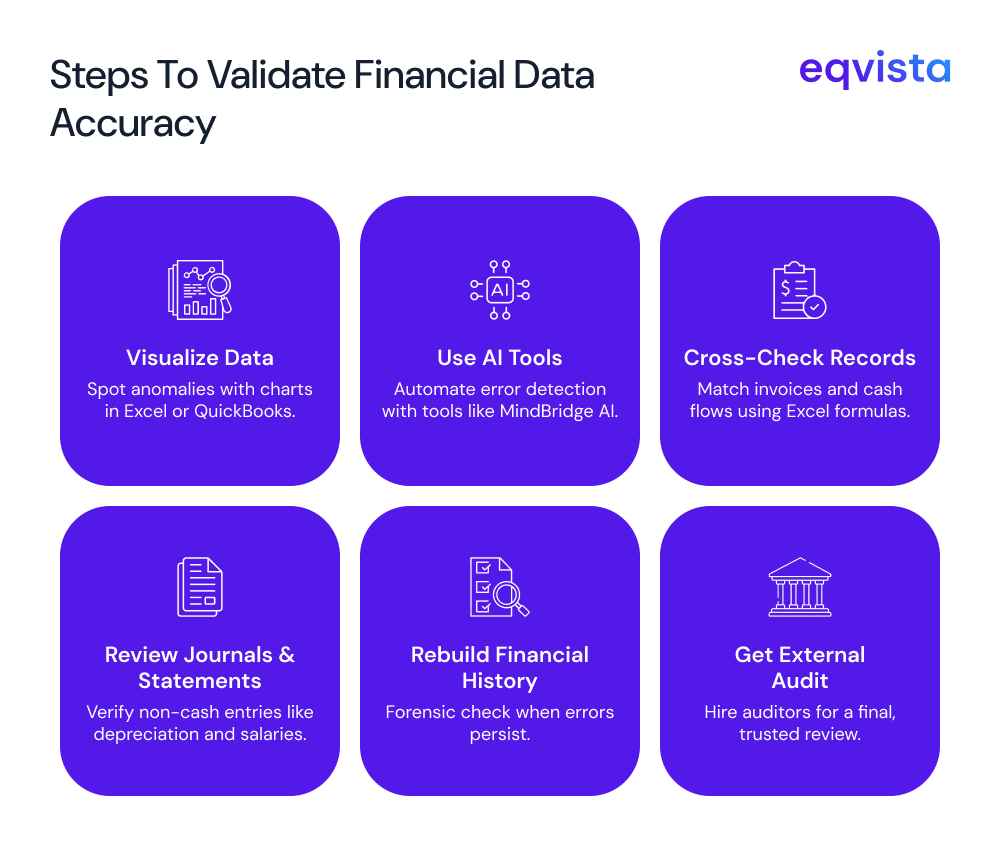
Tools That Improve Financial Accuracy

Tools That Improve Financial Accuracy

Key Takeaways:

  • Achieving financial accuracy requires leveraging the right tools for bookkeeping, reconciliation, and reporting.
  • Automation plays a crucial role in minimizing errors and freeing up time for strategic financial analysis.
  • Cloud-based solutions offer accessibility, collaboration, and real-time insights into your financial data.
  • Regularly reviewing and updating your financial processes is essential for maintaining financial accuracy.

Accurate financial information is the lifeblood of any successful organization. It provides a clear picture of performance, supports informed decision-making, and ensures compliance. However, maintaining financial accuracy can be a challenge, especially for businesses juggling multiple transactions, accounts, and reporting requirements. Fortunately, numerous tools are available to streamline your financial processes and minimize errors. Let’s explore some of the most effective options that can help us improve the financial accuracy of your organization.

Automating Bookkeeping for Improved Financial Accuracy

Manual bookkeeping is time-consuming, prone to errors, and difficult to scale. Modern accounting software solutions automate many of these tasks, significantly improving financial accuracy. These tools allow us to:

  • Automate data entry: Connect your bank accounts and credit cards to automatically import transactions, reducing the risk of manual errors.
  • Streamline invoice management: Create and send professional invoices, track payments, and automate reminders to ensure timely payments and accurate revenue recording.
  • Manage expenses efficiently: Capture receipts digitally, categorize expenses accurately, and generate expense reports automatically.
  • Simplify payroll processing: Calculate payroll taxes, generate paychecks, and file payroll reports with ease, ensuring compliance and accurate employee compensation.

Popular options include QuickBooks Online, Xero, and Zoho Books. These cloud-based solutions offer user-friendly interfaces, robust features, and integrations with other business applications, allowing us to customize them to fit your specific needs.

Streamlining Reconciliation for Enhanced Financial Accuracy

Reconciliation is a critical process for verifying the accuracy of your financial records. It involves comparing your internal records with external statements, such as bank statements and credit card statements, to identify any discrepancies. Reconciliation tools automate this process, saving time and improving financial accuracy.

  • Automated matching: Automatically match transactions between your bank statements and your accounting software, highlighting any discrepancies for review.
  • Exception handling: Easily identify and resolve discrepancies, such as missing transactions, incorrect amounts, or duplicate entries.
  • Reporting and audit trails: Generate reconciliation reports and maintain audit trails to document the reconciliation process and ensure accountability.

BlackLine and FloQast are examples of specialized reconciliation software that can automate even the most complex reconciliation processes. These tools provide advanced features such as variance analysis, workflow management, and automated certifications, further enhancing financial accuracy.

Leveraging Reporting Tools for Clear Financial Accuracy

Financial reporting is essential for communicating your financial performance to stakeholders, including investors, lenders, and management. Accurate and timely financial reports are crucial for making informed decisions and maintaining investor confidence. Reporting tools help us generate these reports with ease and accuracy.

  • Customizable reports: Create custom reports tailored to your specific needs, including income statements, balance sheets, cash flow statements, and budget vs. actual reports.
  • Real-time dashboards: Track key performance indicators (KPIs) in real-time using interactive dashboards, providing a clear overview of your financial health.
  • Data visualization: Visualize your financial data using charts and graphs, making it easier to identify trends, patterns, and anomalies.

Tools like Tableau and Power BI integrate with accounting software and other data sources to provide advanced reporting and analytics capabilities. These tools allow us to drill down into your financial data, identify areas for improvement, and make data-driven decisions.

Implementing Budgeting Software for Precision Financial Accuracy

Budgeting software is an invaluable tool for planning and managing your finances effectively, contributing significantly to financial accuracy. It allows us to:

  • Create realistic budgets: Develop detailed budgets based on historical data, industry benchmarks, and future projections.
  • Track budget performance: Monitor your actual spending against your budget, identifying variances and areas where you can save money.
  • Forecast future performance: Use budgeting software to project future financial performance based on different scenarios, helping you make informed decisions about investments and expenses.
  • Collaborate effectively: Budgeting software often allows multiple users to collaborate on the budgeting process, ensuring everyone is aligned on financial goals.

Examples of budgeting software include Adaptive Insights and Planful. These tools offer advanced features such as rolling forecasts, scenario planning, and what-if analysis, helping you stay on track and achieve your financial goals with enhanced financial accuracy.

Stronger Leadership Skills for Better Outcomes

Key Takeaways:

  • Developing strong leadership skills is crucial for achieving better outcomes in any professional setting.
  • Effective communication, clear delegation, and a focus on team motivation are essential components of successful leadership.
  • Adaptability and continuous learning are key to staying ahead and meeting the evolving demands of leadership roles.

Are you striving for better results in your professional life? Do you feel like something’s holding you back from reaching your full potential? The answer might lie in developing stronger leadership skills. Many believe leadership skills are only for those in management positions, but the truth is, these skills benefit everyone, regardless of their role. When we focus on improving how we lead, motivate, and communicate, we create a more positive and productive environment for ourselves and those around us. This, in turn, leads to improved outcomes across the board. This article offers practical strategies to help improve your leadership skills and achieve the results you’re after.

Cultivating Communication Leadership Skills

Effective communication is the cornerstone of all successful relationships, both personal and professional. As a leader, your ability to clearly articulate your vision, provide constructive feedback, and actively listen to your team is paramount. When team members understand what is expected of them and feel heard and valued, they are more likely to be engaged and motivated.

Think about how you currently communicate with your team. Are you clear and concise in your instructions? Do you provide regular feedback, both positive and negative? Do you actively listen to your team’s concerns and ideas? If not, there’s room for improvement.

Here are a few ways to cultivate your communication leadership skills:

  • Practice active listening: Pay attention to what others are saying, both verbally and nonverbally. Ask clarifying questions and summarize what you’ve heard to ensure you understand their perspective.
  • Be clear and concise: Avoid jargon and ambiguity. Use language that is easy to understand and get straight to the point.
  • Provide regular feedback: Don’t wait for performance reviews to give feedback. Provide ongoing feedback, both positive and negative, so your team members know where they stand.
  • Be open to feedback: Ask your team for feedback on your communication style. This will help you identify areas where you can improve.
  • Use different communication channels effectively: Understand when to use email, instant messaging, video calls, or in-person meetings. Some messages are better delivered face-to-face.

By making a conscious effort to improve your communication, you will build stronger relationships with your team and create a more productive and collaborative environment. This will translate directly into better outcomes for everyone.

Mastering Decision-Making Leadership Skills

Strong leaders are decisive, but also thoughtful. They don’t rush into decisions without first gathering the necessary information and weighing the pros and cons. They also understand that not all decisions are created equal. Some decisions require careful analysis and deliberation, while others can be made quickly and efficiently. The key is to know the difference.

Effective decision-making involves:

  • Gathering information: Research the issue thoroughly and gather all relevant data. Don’t rely on assumptions or hearsay.
  • Identifying alternatives: Brainstorm different options and solutions. Don’t settle for the first idea that comes to mind.
  • Evaluating the pros and cons: Weigh the advantages and disadvantages of each option. Consider the potential impact on your team and the organization as a whole.
  • Making a decision: Choose the best option based on your analysis. Be confident in your decision and communicate it clearly to your team.
  • Evaluating the results: Track the outcome of your decision and learn from your mistakes.

It is important to note that even the best leaders make mistakes. The key is to learn from those mistakes and use them as an opportunity to improve your decision-making process. Don’t be afraid to admit when you’re wrong and be willing to change course if necessary. This willingness to learn and adapt is a hallmark of a true leader. When us leaders are better at decision-making, we improve not just our outcomes but the outcomes of everyone on our team.

Strengthening Delegation Leadership Skills

Many leaders struggle with delegation. They may feel like it’s easier to do things themselves, or they may be afraid to relinquish control. However, effective delegation is essential for scaling your impact and developing your team. When you delegate tasks effectively, you free up your time to focus on more strategic initiatives and provide opportunities for your team members to grow and develop their skills.

To delegate effectively:

  • Choose the right person: Assign tasks to individuals who have the skills and experience to succeed. Consider their strengths and weaknesses and match them with the appropriate task.
  • Provide clear instructions: Explain the task in detail, including the expected outcome, deadlines, and any relevant resources.
  • Empower your team: Give your team members the authority and autonomy to make decisions and take ownership of their work.
  • Provide support and guidance: Be available to answer questions and provide support as needed, but avoid micromanaging.
  • Give feedback and recognition: Acknowledge and appreciate your team’s efforts. Provide regular feedback to help them improve their performance.

Good delegation is a two-way street. It benefits both the leader and the team member. It frees up the leader’s time and allows the team member to develop new skills and gain experience. It also fosters a sense of trust and mutual respect.

Boosting Motivation Leadership Skills

A motivated team is a productive team. As a leader, it’s your responsibility to create an environment where your team members feel valued, appreciated, and inspired to do their best work. This involves understanding what motivates each individual and tailoring your approach accordingly.

Some common motivators include:

  • Recognition and appreciation: Acknowledge and celebrate your team’s successes. Publicly recognize their contributions and let them know that their work is valued.
  • Opportunities for growth and development: Provide opportunities for your team members to learn new skills and advance their careers.
  • A sense of purpose: Help your team understand how their work contributes to the overall goals of the organization.
  • Autonomy and independence: Give your team members the freedom to make decisions and take ownership of their work.
  • A positive work environment: Create a culture of trust, respect, and collaboration.

It’s important to remember that everyone is different, and what motivates one person may not motivate another. Take the time to get to know your team members and understand their individual needs and aspirations. By creating a motivating environment, you will unleash the full potential of your team and achieve better outcomes. Stronger leadership skills also means knowing yourself.